I opened a time tracking app last Tuesday morning with the best intentions. By Wednesday afternoon, I'd uninstalled it.
The problem wasn't the app. It was the knot in my stomach every time I looked at the data.
Three hours on "admin tasks"? Two hours "lost" to email? Forty-seven minutes scrolling X when I should have been writing?
Each logged minute felt like evidence. Evidence that I was lazy. Inefficient. Wasting my life.
If you've ever tried time tracking and abandoned it within a week, you're not alone. And you're definitely not the problem.
The problem is how we've been taught to think about time tracking - as surveillance instead of discovery, as judgment instead of curiosity.
The Crash Diet Approach to Time Tracking
Most people approach time tracking the same way they approach January diets: with shame, dread, and a desperate hope that suffering will somehow fix everything.
You download an app. You log activities obsessively for three days. You see the "wasted" time pile up. You feel terrible. You quit.
After 20 years coaching professionals through productivity struggles, I've watched this pattern repeat hundreds of times. The app isn't the problem. The emotional framework is.
Time tracking marketed as "accountability" becomes self-punishment. Time tracking presented as "optimization" becomes overwhelming. And both approaches guarantee you'll quit before learning anything useful.
Here's what I discovered working with a burned-out software engineer last year: when we reframed time tracking from judgment to curiosity, everything changed.
Instead of asking "Why am I so bad at this?" we started asking "What patterns am I not seeing?"
The difference transformed not just his productivity, but his entire relationship with work.
Why Traditional Time Tracking Fails
The Guilt and Shame Loop
As an economist, I understand metrics. Data drives decisions. But here's what the productivity gurus won't tell you: you can't shame yourself into sustainable change.
Research on shame and behavior shows that while shame may motivate a desire to change, it often leads to avoidance and hiding rather than productive action. When time tracking makes you feel bad, your brain does what brains do – it protects you by making you quit.
Every hour labeled "wasted" is a little hit of self-criticism. Stack enough of those together, and your brain starts associating time tracking with feeling terrible about yourself.
No wonder people abandon it.
The Over-Engineering Trap
Then there's the opposite problem: tracking becomes so granular it's exhausting.
Five-minute increments. Forty different project categories. Tags for energy levels, interruptions, and context switches. Desktop trackers plus phone trackers plus browser extensions.
I've seen professionals spend more time logging their work than actually doing it.
The irony? All that precision creates noise, not insight. You're drowning in data points but missing the actual patterns that matter – like realizing your energy crashes every day at 2 PM, or that "quick check-ins" are destroying your deep focus windows.
Missing the Actionable Insights
Here's the brutal truth: most time tracking tools show you what you did, but not why it matters or what to do differently.
You spent 12 hours working last Tuesday. Great. Was that productive? Exhausting? Sustainable?
You averaged 47 "context switches" per day. Okay. But what's causing them? Which ones matter? Which ones drain you?
Data without context is just numbers. And numbers without action are just guilt with extra steps.
That's why simply tracking your time isn't enough. You need to track it with intention, review it with curiosity, and act on it with self-compassion.
What Empowering Time Tracking Actually Looks Like
Track With Curiosity, Not Judgment
The single biggest shift: treat your time data like a scientist observing an experiment, not a judge reviewing evidence.
When you notice you spent 90 minutes scrolling social media, the question isn't "What's wrong with me?"
The question is: "What was I avoiding? Was I tired? Anxious? Bored? What need was that behavior trying to meet?"
This changes everything. Research on self-compassion shows that treating yourself with kindness rather than harsh judgment is far more effective for creating lasting behavioral change.
One executive I coached discovered through gentle tracking that her "procrastination" always spiked before difficult conversations. Not a character flaw - an avoidance pattern she could now address directly.
That's the power of curiosity over judgment.
Focus on Energy, Not Just Hours
Here's something traditional time tracking misses entirely: not all hours are equal.
Two hours of deep work when you're energized and focused can produce more than eight hours of fragmented, distracted effort. But most time trackers only count duration, not quality.
Better approach: track your time in relation to your energy.
Instead of "worked 8 hours today," ask: "When was I most energized? When did I hit a wall? What patterns emerge?"
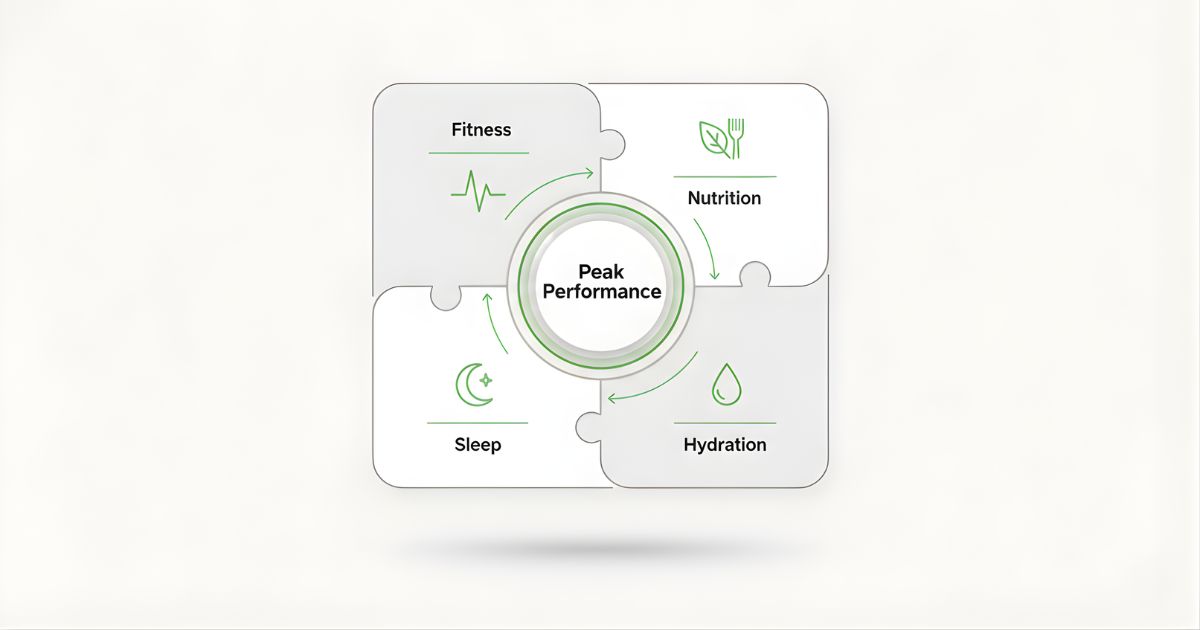
This is why tools that help you understand your natural rhythms matter more than tools that just count minutes. Better sleep improves focus. Strategic breaks preserve energy. Proper hydration affects cognitive function.
The goal isn't working more hours. It's working better hours.
Weekly Reviews Over Daily Pressure
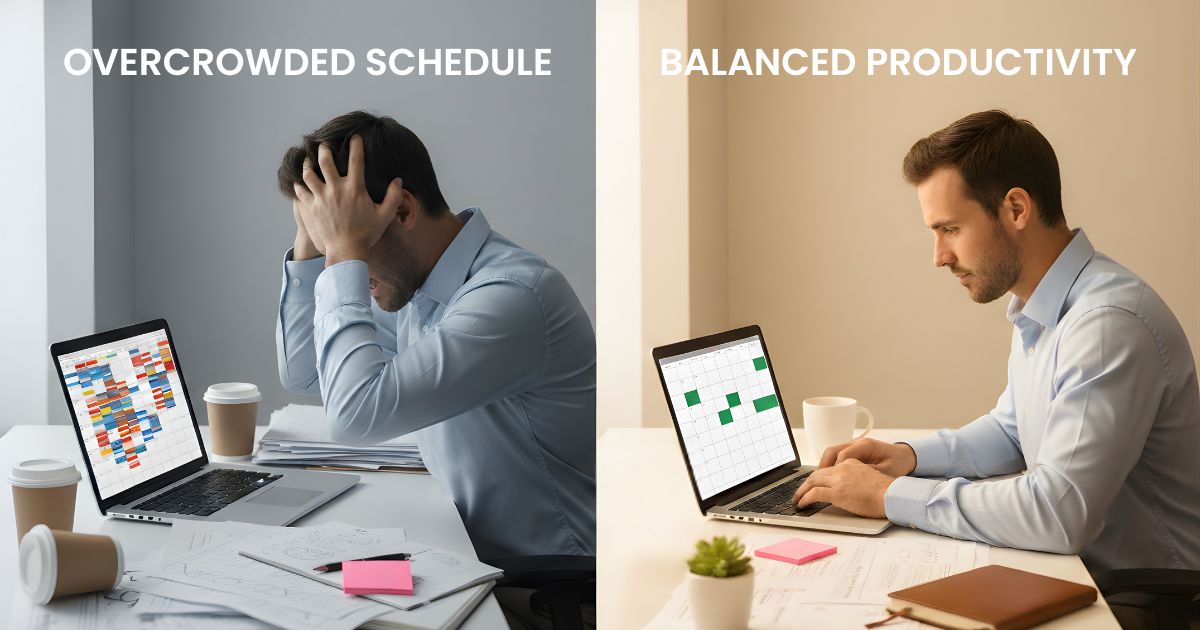
Daily time tracking can feel suffocating. You check the app. See a "bad" day. Feel guilty. Repeat.
Instead, zoom out. Track throughout the week, then review the patterns on Friday or Sunday.
What you're looking for:
- Energy peaks and valleys – When are you naturally most focused? When do you crash?
- Hidden time drains – Are meetings clustering on certain days? Is email consuming mornings?
- Protective insights – What's actually working? What small changes would have outsized impact?
Weekly reviews give you perspective without pressure. You're not trying to have a "perfect day" every day – you're trying to understand your rhythms and work with them, not against them.
The Tools and Strategies That Actually Work
Start With Broad Categories
Forget tracking every five-minute task. Start simple:
- Deep Work – Focused, challenging cognitive tasks
- Shallow Work – Email, admin, scheduling, quick responses
- Meetings & Calls – Scheduled collaboration time
- Breaks & Recovery – Intentional rest (yes, this counts)
That's it. Four categories. You can always add nuance later, but start embarrassingly simple.
Our Time Tracking category features tools designed for clarity, not complexity - apps that make logging effortless so you can focus on insights, not data entry.
Choose Tools That Match Your Style
Not all time trackers are created equal. Some are automatic and passive. Others require manual input. Neither is "better" - it depends on your workflow and resistance points.
If you forget to track: Consider automatic trackers like RescueTime that run in the background and categorize your activities without manual input.
If you want intentionality: Try manual trackers like Toggl Track that make you consciously start and stop timers - building awareness through the act of tracking itself.
If you need simplicity: Use Timely which combines automatic tracking with easy editing - capturing everything without overwhelming you with decisions.
The best tool is the one you'll actually use. Browse our curated Time Tracking tools to find what fits your needs.
The 7-Day Discovery Experiment
Here's how to start without the pressure:
Commit to one week only. Not forever. Just seven days.
Frame it as an experiment, not a judgment. You're a scientist gathering data about your own life. No good days or bad days – just information.
Track in those four broad categories (Deep Work, Shallow Work, Meetings, Breaks). Use whatever tool feels easiest.
At the end of the week, ask yourself three questions:
- What surprised me? (Maybe you're not "lazy" – you're just scheduling deep work during your natural energy lows.)
- What drained me? (Maybe it's not the work itself, but the constant interruptions.)
- What energized me? (Maybe that "unproductive" hour walking actually made the next three hours more focused.)
That's it. One week of gentle observation. No pressure to "fix" anything yet. Just see what you learn.
Integrating Time Tracking With Your Broader Habits
Time tracking doesn't exist in isolation. It's most powerful when connected to your other habits:
Pair it with Prioritization: Once you see where time actually goes, you can align it with what truly matters.
Connect it to Scheduling: Use your tracking insights to design better schedules that respect your energy patterns.
Link it to Habit Tracking: Track not just time spent, but consistency on the habits that build momentum.
Combine with Journaling: Reflect on what the data means - context transforms numbers into wisdom.
Support with Mental Wellness: If tracking triggers anxiety, address that directly rather than abandoning the practice.
This is why Better Habits Hub curates tools across all 21 categories - because sustainable change happens when systems support each other. Browse all categories to see how everything connects.
Common Questions About Time Tracking
How detailed should my tracking be?
Start broad. Track just 3-4 major categories for the first month. Add detail only if you need it for specific insights. More data doesn't mean better insights - it often means more overwhelm.
What if I forget to track consistently?
That's useful data too. What does it mean when you forget? Are you avoiding uncomfortable insights? Is the tool too complex? Use automatic tracking if manual logging creates resistance.
How do I avoid the guilt spiral?
Reframe every observation as information, not judgment. "I spent 90 minutes on social media" is a neutral fact. The guilt comes from the story you tell about it. Practice asking "What pattern is this showing me?" instead of "What's wrong with me?"
Should I track personal time too, or just work?
Start with whatever domain causes you the most concern. Many people track only work initially, then expand to personal time once the practice feels natural. There's no "should" - only what serves your goals.
What if the data is depressing?
If tracking makes you feel worse consistently, pause and ask why. Often, the issue isn't the data itself but unrealistic expectations. You might be shocked to learn that three hours of genuine deep work per day is actually excellent - most people average far less. Context matters.
The Real Goal: Respecting Your Finite Resource
Time tracking isn't about squeezing more productivity from each hour.
It's about seeing your life with clarity so you can make conscious choices about this precious, non-renewable resource.
It's about noticing patterns you can't see when you're in the middle of them.
It's about respecting yourself enough to ask: "Is this how I want to spend my days?"
When a client first tracks their time, they're often surprised by what they find. Not because they're "wasting" time – but because they finally see where their energy actually goes versus where they think it goes.
That gap? That's where real change begins.
The software engineer I mentioned earlier? After his 7-day experiment, he didn't dramatically overhaul his schedule. He made three small shifts:
- Moved his hardest thinking work to mornings (his natural energy peak)
- Blocked 2-hour chunks for deep work instead of believing he could focus in 30-minute fragments
- Scheduled "waste time" intentionally on Friday afternoons (removing the guilt when it happened)
Result? Same number of working hours. Double the output. And for the first time in years, he felt in control of his time instead of controlled by it.
That's the power of tracking time with curiosity instead of judgment.
Your Next Steps
You don't need to become a time-tracking perfectionist. You just need to start observing with kindness.
This week:
- Choose one simple tool from our Time Tracking category
- Track in just 3-4 broad categories (Deep Work, Shallow Work, Meetings, Breaks)
- Commit to 7 days only as an experiment
- Review on Day 8 with curiosity: What surprised you? What patterns emerged?
That's it. No pressure to optimize. No guilt about "wasted" hours. Just observation.
Because the moment you start seeing your time clearly - without judgment - you gain the power to shape it.
And that's worth far more than any productivity hack.
Ready to build better systems around your time and energy?
Stop treating time tracking as surveillance. Start using it as self-discovery.
👉 Subscribe to Our Newsletter for more practical, no-BS strategies that actually work.
Explore More:
→ Time Tracking Tools – Simple, human-centered apps
→ Prioritization – Align your time with what matters
→ Time Allocation – Master your hours with better systems
→ Discover All 630+ Tools
Because tracking time isn't about working harder. It's about living better.
---
— Mi Rad
PhD Economist & Business Coach