If you've ever sat down to work and found yourself "just quickly checking" emails, social media, or news – only to look up an hour later wondering where the time went – you're not alone.
In fact, you're battling a set of silent forces that are systematically shredding your attention span.
And here's the kicker: without focus, all the good habits you try to build – learning, journaling, exercise, mindfulness – collapse under the weight of endless distraction.
Attention isn't a personal flaw. It's a modern casualty.
Why Your Attention Matters More Than Ever
Back when I was juggling corporate roles and launching new projects on the side, I found myself constantly "busy" but somehow achieving very little.
Meetings, emails, news, Twitter, WhatsApp, colleagues – it felt important, even urgent. But deep down, I knew it wasn't the work that mattered. It was noise masquerading as productivity.
The breaking point? Realizing I couldn't remember the last time I'd spent even 30 uninterrupted minutes on something meaningful.
It wasn't until I consciously rebuilt my focus habits – stripping away the silent killers one by one – that my real momentum returned.
What most people don't realize: Your attention is your most valuable non-renewable resource. More precious than time, because time without attention is just wasted hours.
The Jigsaw Blade Effect: Why Distractions Are So Destructive
Imagine your focus over time as a graph.
When you're working deeply, your concentration rises steadily – building momentum, entering flow states, making real progress.
Then a notification pings. You "quickly" check it. Your focus crashes back to zero.
You rebuild. Start climbing again. Another interruption. Crash.
Rise. Interrupt. Crash. Rise. Interrupt. Crash.
Your focus graph looks like the teeth of a jigsaw blade – jagged, violent, exhausting.
This isn't just frustrating. It's neurologically expensive. Each interruption costs you roughly 23 minutes to fully recover your deep focus state, according to research from the University of California, Irvine. (source)
No wonder deep work feels so hard. You're not weak. You're just getting sabotaged hundreds of times a day.
The Silent Killers: What's Destroying Your Focus
1. Constant Notifications
Every ping is a derailment. Every buzz is a cognitive tax.
Even if you don't check the notification, your brain knows it's there – creating what psychologists call "attention residue."
The damage: You're never fully present. Part of your mind is always monitoring for the next alert.
2. The Multitasking Myth
You think you're efficient. You're actually hemorrhaging productivity.
Studies from the American Psychological Association show that multitasking can reduce productivity by up to 40% and increase errors dramatically. (source)
The truth: Your brain doesn't multitask. It task-switches – rapidly shifting between activities while losing efficiency at each transition.
3. Information Overload
Social media feeds. News alerts. Slack channels. Email threads. YouTube recommendations.
Your brain is drowning in unstructured information, scattering your thoughts and weakening deep thinking.
The result: You know a little about everything but can't think deeply about anything.
4. Poor Sleep and Physical Health
This one's often ignored, but it's brutal: lack of sleep destroys attention more effectively than alcohol.
Research shows that 17 hours of sustained wakefulness impairs performance equivalent to a blood alcohol level of 0.05%. (source)
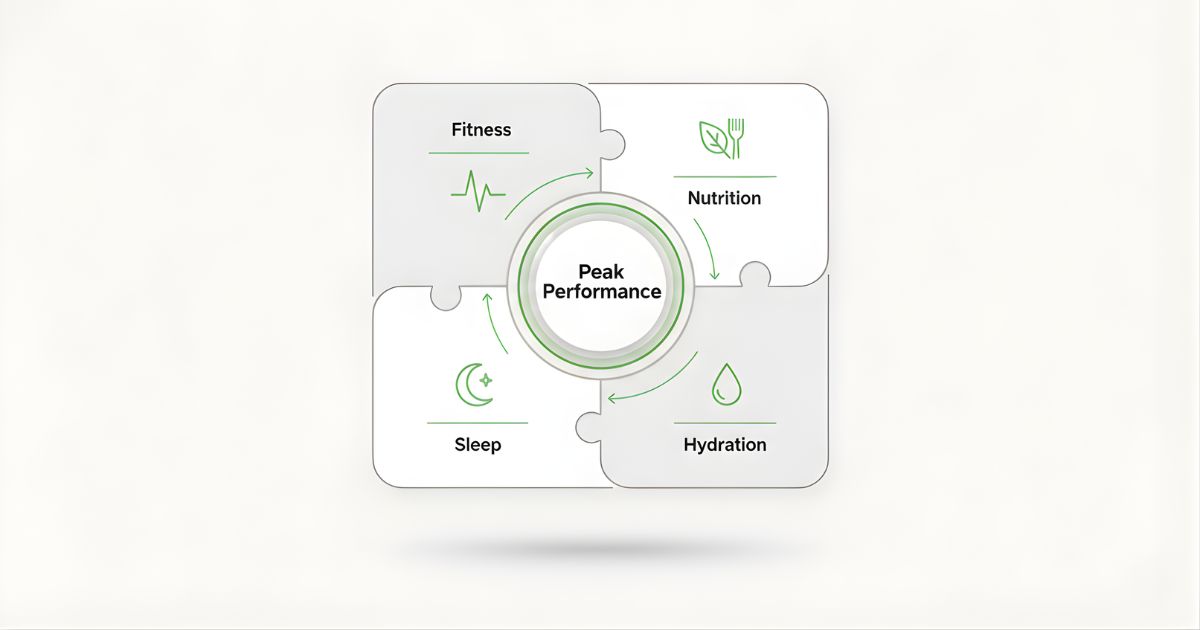
Add dehydration, poor nutrition, and sedentary behavior, and your brain simply can't focus—no matter how much you want it to.
5. Environment Design (Or Lack Thereof)
Cluttered desk. Open browser tabs. Phone within reach. Noisy surroundings.
Your environment is a focus killer.
Willpower is finite. Environment is constant. If your workspace invites distraction, you'll lose every time.
Why Willpower Alone Isn't Enough
Most people try to "focus harder."
Bad news: willpower is a fragile, depleting resource. You don't need more discipline. You need better systems.
Think of attention like a muscle. Yes, you can train it. But if you're constantly lifting weights in a chaotic gym with people throwing things at you, training becomes impossible.
You need to:
- Remove the distractions (change the environment)
- Build your focus capacity (train the muscle)
- Create rituals (automate the behavior)
How to Rebuild Your Focus: Practical Solutions
Step 1: Audit Your Attention Leaks
Track what steals your focus over a typical day.
Try this: For three days, note every time your attention breaks. What triggered it? Phone? Email? Colleague? Hunger?
Awareness is step one. You can't fix what you can't see.
Tools to help: Explore apps in our Time Tracking category to monitor where your hours actually go.
Step 2: Eliminate Notification Noise
The nuclear option: Turn off ALL non-essential notifications.
Seriously. Everything except calendar alerts and maybe calls from your family.
How to do it:
- Phone: Settings → Notifications → Disable for all apps except essentials
- Desktop: Use Focus Mode (Mac) or Focus Assist (Windows)
- Browser: Remove notification permissions from every website
Need help? Check out tools in our Screen Detox category that help you reclaim control from your devices.
Step 3: Use Tools to Block Distractions
Apps exist specifically to protect your focus by blocking tempting websites and apps during work sessions.
Recommended tools:
- Freedom - Block websites and apps across all devices
- Cold Turkey - Hardcore blocking (can't bypass even if you try)
- Forest - Gamified focus timer that grows virtual trees
Step 4: Practice Deep Focus Sessions
Start small. You can't go from zero to four-hour flow states overnight.
The Pomodoro Technique:
- Work for 25 minutes (uninterrupted)
- Break for 5 minutes
- Repeat 4 times
- Take a longer 15-30 minute break
Why it works: Short bursts are achievable. Your brain knows relief is coming, making it easier to resist distractions.
Tools that help: Explore our Time Allocation category for Pomodoro timers and focus session trackers.
Step 5: Fix the Physical Foundations
You can't focus with a tired, dehydrated, undernourished brain.
Non-negotiables:
- Sleep: 7-9 hours. Not optional. Explore tools in our Sleep category.
- Hydration: Drink water throughout the day. Find trackers in our Hydration section.
- Movement: Even 10 minutes of walking improves focus. See our Fitness & Exercise tools.
Step 6: Take Mindful Breathing Breaks
Short, mindful breathing exercises can reset your brain's stress response in minutes.
Box breathing (Navy SEAL technique):
- Inhale for 4 seconds
- Hold for 4 seconds
- Exhale for 4 seconds
- Hold for 4 seconds
- Repeat 4-5 times
Result: Parasympathetic nervous system activation = calmer, clearer thinking.
Find guided tools: Explore our Meditation & Mindfulness and Breathing categories.
Step 7: Design Your Environment for Focus
Workspace audit:
- Remove or hide your phone (different room if possible)
- Close unnecessary browser tabs (use tab managers)
- Clear physical clutter from your desk
- Use noise-canceling headphones or white noise
- Have water and healthy snacks within reach
The principle: Make focused work the path of least resistance.
Need help organizing? Check out our Decluttering category for tools that help.
Common Questions About Rebuilding Focus
How long does it take to rebuild your attention span?
Honestly? It depends on how damaged it is and how consistent you are with the fixes.
Most people notice improvements within 7-14 days of removing major distractions and practicing focused work sessions.
Full recovery – building truly deep focus capacity – can take 4-12 weeks of consistent practice.
The key: Start small. Even 15-minute focus blocks are progress.
Can I ever check social media again?
Of course. But not during work sessions.
The strategy: Designate specific times for social media (e.g., lunch break, after work). Use blocking tools during focus time.
Treat it like junk food: Okay in moderation, toxic if it's constant.
What if my job requires constant communication?
Set boundaries.
Examples:
- Batch check emails at 10 AM, 2 PM, and 4 PM (instead of constantly)
- Set Slack/Teams status to "Focus Time - Will respond at [time]"
- Use auto-responders to set expectations
The truth: Most "urgent" things can wait 2 hours. Your deep work can't.
I work from home with kids/family. How do I focus?
It's harder, but not impossible.
Strategies:
- Communicate your focus blocks clearly ("I need quiet from 9-11 AM")
- Use visual signals (closed door, headphones, "Do Not Disturb" sign)
- Wake up earlier for focus time before family wakes
- Use childcare or trade shifts with partner during critical work sessions
What's the single best tool for rebuilding focus?
There isn't one. Different tools work for different people.
Start with these categories:
- Attention - Website blockers and distraction reduction tools
- Deep Focus - Concentration techniques and focus training
- Time Allocation - Pomodoro timers and time-blocking tools
Try 2-3 tools and see what sticks.
The Path Forward: Protecting Your Most Valuable Resource
Attention is your ultimate unfair advantage – but only if you treat it as a precious resource, not an unlimited one.
Rebuilding your focus isn't about becoming a productivity robot. It's about reclaiming your ability to:
- Do work that matters
- Connect deeply with people
- Build a life that's intentional instead of reactive
The compound effect of protected attention is extraordinary. What could you achieve with even 2-3 hours of deep focus daily?
Ready to Stop Drowning in Distractions?
Join thousands of professionals who get our weekly insights on focus, habits, and the tools that actually work.
👉 Subscribe to Our Newsletter - One email, once a week, zero fluff.
Or start rebuilding your focus right now:
→ Block Distractions - Attention Tools
→ Train Your Focus - Deep Focus Tools
→ Reduce Screen Time - Screen Detox
→ Browse All 21 Categories
Let's reclaim your attention, one focused session at a time.
---
— Mi Rad
PhD Economist & Business Coach