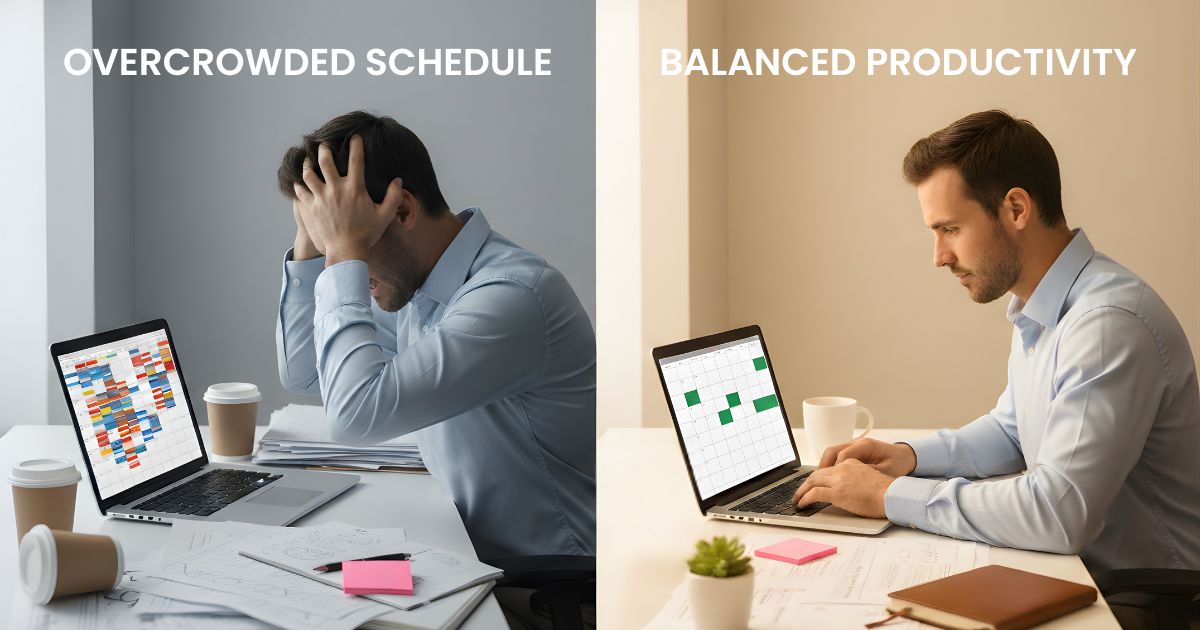
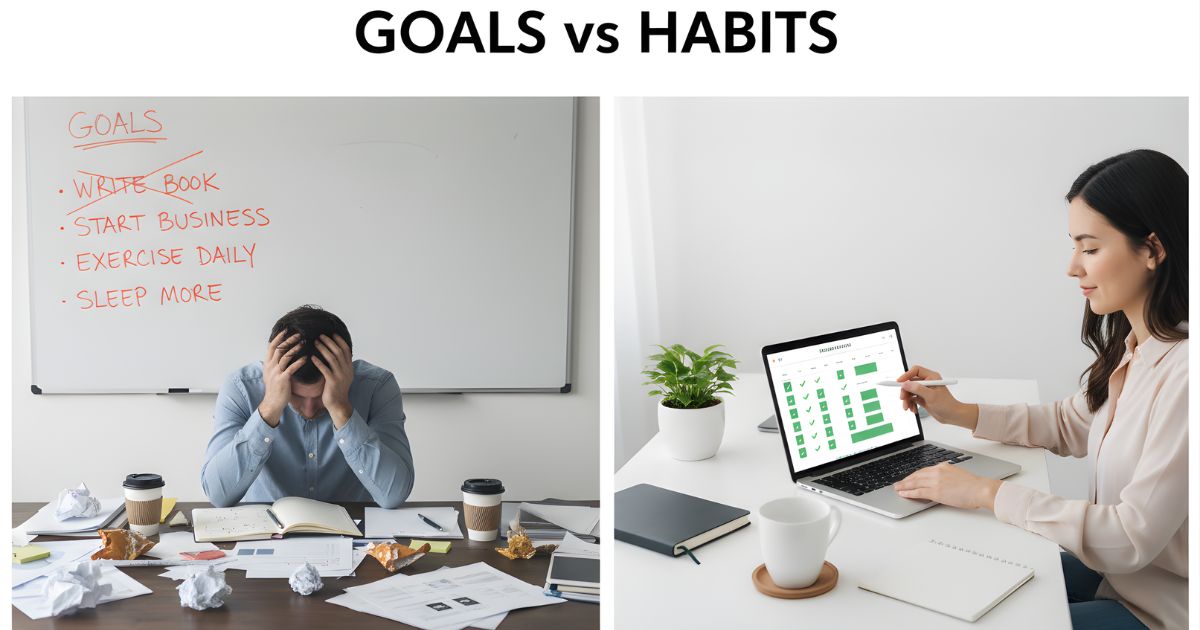
Most people treat fitness, nutrition, sleep, and hydration as four separate goals they should get around to improving – someday.
They optimize one. They neglect the others. They wonder why nothing sticks.
Here's what two decades of coaching professionals have taught me: these aren't four separate goals. They're one system. And the moment you start treating them that way, every other habit you're trying to build – focus, attention, mental wellness – becomes dramatically easier.
I call it the Habit Quad. And most high-performers are running it broken.
Why Your Other Habits Keep Failing
Before we get into the four pillars, I need to say something uncomfortable.
Most productivity advice is built on a faulty assumption: that your mind is a separate machine from your body, one you can optimize independently. Want better focus? Install this app. Want more willpower? Build this mental habit.
The research tells a different story. A study published in SLEEP — the journal of the American Academy of Sleep Medicine found that restricting sleep to six hours per night for 14 consecutive days produced cognitive impairment equivalent to a full night of no sleep — and critically, subjects were largely unaware their performance had degraded at all. Their brains were running on empty while they thought they were fine.
Willpower, focus, emotional regulation – they're not mental traits you develop in isolation. They're downstream outputs of your physical state.
Which means if you're trying to build better habits while your physical foundation is crumbling, you're fighting with one hand tied behind your back.
The Habit Quad is about fixing the foundation first.
The Four Pillars — and Why They're Inseparable
Pillar 1: Sleep — Recovery, Not Just Rest
Here's the distinction that changes everything: rest is passive. Recovery is active.
You can lie down for eight hours and still not recover. Scrolling your phone until midnight, sleeping in a warm room, drinking two glasses of wine before bed – you're resting. Your biology isn't recovering.
Research from the National Sleep Foundation shows that sleep is when your brain consolidates memories, your muscles repair tissue, your hormones reset, and your immune system does its primary maintenance work. None of that happens adequately in fragmented, shallow, or chronically short sleep.
In my coaching practice, whenever a client comes to me unable to sustain any other habit – exercise, nutrition, focus – sleep is the first place I look. Nine times out of ten, that's where the system is broken.
The fix isn't a sleep app. It's treating sleep like the performance lever it actually is. Start tracking it with a tool from our Sleep category – even a basic log of hours and quality – and patterns emerge within a week that explain a lot.
Pillar 2: Fitness — Training, Not Just Moving
Movement burns calories. Training builds capacity.
This is the distinction most gym-goers never make – and it's why they look and feel essentially the same year after year. They're showing up. They're moving. They're just not training.
A systematic review published in AJPM Focus found that people with high physical activity levels had a meaningfully lower risk of developing depression – with one high-quality study within the review reporting up to 48% reduced odds for those exercising more than 30 minutes per day. The mechanism isn't just endorphins. It's mitochondrial density, BDNF production, cortisol regulation. Exercise doesn't just make your body stronger. It makes your brain work better.
For habit-building specifically, Fitness & Exercise works as what researchers call a "keystone habit" – one behavior that cascades into other positive behaviors. When clients start a consistent exercise routine, they spontaneously improve their nutrition. They start sleeping better. Their mental wellness scores rise without any direct intervention.
The bar to start is lower than you think. Three sessions per week. Twenty to thirty minutes each. Intensity is irrelevant at the start – consistency is everything. Track it with tools like Strava or Hevy to see progress accumulate over time.
Pillar 3: Nutrition — Fueling, Not Just Eating
Everyone eats. Almost nobody fuels.
The difference shows up not on the scale, but in how you think at 3pm. Fueling means feeding your cognition, your energy regulation, your mood stability. Eating means satisfying hunger. They feel identical in the moment and produce radically different outcomes over time.
As a PhD economist, I look at Nutrition the way I'd analyze any production input: it's not the cost that matters, it's the output quality. A 400-calorie lunch of processed carbohydrates and a 400-calorie lunch of protein, healthy fats, and fiber produce very different cognitive performance in the afternoon. The calorie count is the same. The output is not.
The research on this is unambiguous. A landmark study from the British Journal of Health Psychology tracking 281 adults over 13 days found that higher consumption of fruit and vegetables was associated with greater curiosity, creativity, and flourishing — independent of income, education, or exercise. What you eat changes how you think. Directly.
You don't need to count every calorie. You need awareness. Start with a Nutrition tracking tool for two weeks – not to restrict, but to see what's actually going in. The data is usually surprising. And once you see the patterns, the adjustments become obvious.
Pillar 4: Hydration — Drinking, Not Just Not Thirsting
Here's the one most people dismiss – until they understand the mechanism.
Hydration isn't about not being thirsty. By the time you feel thirsty, you're already mildly dehydrated – and mild dehydration impairs cognitive performance more than almost any other common physiological state.
Research from the Journal of Nutrition found that dehydration of just 1.36% – barely perceptible – reduced concentration, increased headache frequency, and degraded mood in young women. A follow-up study found similar effects in men at 1.59% dehydration. Neither group was thirsty.
Your brain is 75% water. When that percentage drops even slightly, neural firing slows, decision-making degrades, and fatigue accelerates. Every habit you're trying to build – deep focus, emotional regulation, exercise recovery – runs worse when you're under-hydrated.
Track your intake with a tool from our Hydration category. Set a baseline target – 2.5 to 3.5 liters per day for most adults – and log it for two weeks. The difference in energy and mental clarity surprises almost everyone.
Why the System Breaks When You Separate Them
Here's what makes the Habit Quad genuinely different from four separate health goals: the four pillars are not additive. They're multiplicative.
Poor sleep destroys willpower for nutrition choices. Poor nutrition degrades exercise recovery. Poor hydration impairs sleep quality. Poor exercise undermines metabolic health that sleep depends on.
Each pillar supports the others – and each neglected pillar damages the others.
I had a client – a senior marketing executive – who came to me convinced she had a focus problem. She'd tried attention tools, time-blocking strategies, every productivity system in the book. Nothing held.
When I looked at her Habit Quad, the picture was clear: she was sleeping 5.5 hours on weekdays, skipping breakfast, drinking two large coffees by 9am and almost no water until dinner, and hadn't had a consistent exercise routine in three years.
She didn't have a focus problem. She was running a high-performance brain on a critically depleted physical platform. We rebuilt the Quad first – gradually, without demanding perfection – and within eight weeks, her focus had measurably improved. Without changing a single productivity tool.
The tools mattered. But the foundation had to come first.
Your Four-Week Hab Quad Starter Protocol
The biggest mistake people make when they discover the Habit Quad is trying to overhaul all four areas simultaneously. That's how you end up exhausted and having abandoned everything by week two.
Here's a sequenced approach:
Week 1: Sleep First
Set a consistent sleep window – same bedtime, same wake time – seven days a week. Non-negotiable, even on weekends. Use a Sleep tracker to log hours and perceived quality. Target is seven to nine hours depending on your baseline needs.
You're not optimizing sleep yet. You're establishing the rhythm. Everything else builds from here.
Week 2: Add Movement
Three sessions. Twenty to thirty minutes each. Any form of structured movement counts – walking, lifting, cycling, swimming. The form is irrelevant. The schedule is everything.
Log it with a Fitness & Exercise tool so you can see the streak build. Streaks are motivating in a way that intentions never are.
Week 3: Hydration Baseline
Get a water bottle that holds at least 750ml. Your goal is to empty it three times before dinner. No complex tracking needed yet – just three refills. If you miss the target, note it and move on.
Use our Hydration tools if you want to automate reminders and tracking. They remove friction that kills consistency.
Week 4: Nutrition Awareness
Start logging meals – not to restrict, but to see. Use a Nutrition tool for two weeks before making any significant changes. Understanding what you're actually eating is step one. Optimization is step two. Most people skip step one.
Common Questions About the Habit Quad
What is the Habit Quad?
The Habit Quad is the four-part physical foundation every other habit depends on: fitness, nutrition, sleep, and hydration. These aren't four separate goals – they're one interconnected system. Neglect any one of them, and the other three degrade. Master them together, and every other habit you're trying to build becomes measurably easier.
Which of the four habits should I start with?
Start with sleep. It's the highest-leverage entry point in the Quad because sleep deprivation directly impairs willpower, nutrition decisions, exercise recovery, and hydration awareness. Getting sleep right first makes every other habit easier to implement.
How much water should I drink per day?
General guidance is 2.7 to 3.7 liters per day (including water from food), but individual needs vary based on body weight, activity level, and climate. A practical starting point: drink enough that your urine is pale yellow, not dark. Track intake with a Hydration tool for one week – the patterns it reveals are usually surprising.
Do I need to exercise every day to see results?
No. Research shows three to five structured sessions per week is optimal for most adults. What matters more than frequency is consistency over weeks and months – not how intense any single session is. Starting with 20 minutes three times a week and showing up reliably beats ambitious plans you abandon.
How do I track all four habits without getting overwhelmed?
Start with one tracking tool, not four. Choose a Habit Tracking app that lets you monitor multiple behaviors in one place. Log just three data points daily: sleep hours, water intake, and whether you moved. Add nutrition tracking after two weeks once the first three feel automatic. The goal is awareness first, optimization later.
The Foundation Everything Else Runs On
You can read every productivity book, try every focus technique, build every time-management system – and still feel like you're running at half capacity.
Because performance isn't primarily a productivity problem. It's a physiological one.
The highest-performing professionals I've coached over 20 years aren't necessarily the ones with the best schedulingsystems or the sharpest prioritization tools. They're the ones who've quietly, consistently, unsexy-ly maintained the Habit Quad for years.
They sleep. They move. They fuel. They hydrate. Boring. Powerful. Non-negotiable.
Everything builds on this foundation – your focus, your emotional regulation, your mental wellness, your output. Every hour of work, every habit you're trying to layer on top, runs better when the physical platform underneath it is solid.
The Habit Quad isn't four things you should get around to improving.
It's the one system that makes everything else possible.
Ready to Build Your Habit Quad?
Join thousands of professionals who get our weekly insights on habit-building tools, research, and strategies that actually work.
👉 Subscribe to Our Newsletter – One email, once a week, zero fluff.
Or start building your Quad today:
→ Explore Sleep Tools
→ Browse Fitness & Exercise Tools
→ Find Nutrition Tracking Apps
→ Discover Hydration Tools
→ Discover All 630+ Tools
Build the foundation. Everything else follows.
---
— Mi Rad
PhD Economist & Business Coach